
New Publication
Islamic Psychology
Foundations and Theory
A major new work by Dr Seyed Salman Safavi and Seyed Sadr al-Din Safavi presents Islamic psychology as a systematic science of the soul grounded in tawḥīd, revelation, reason and the Islamic intellectual tradition, and introduces a structural framework for its development as a coherent field.
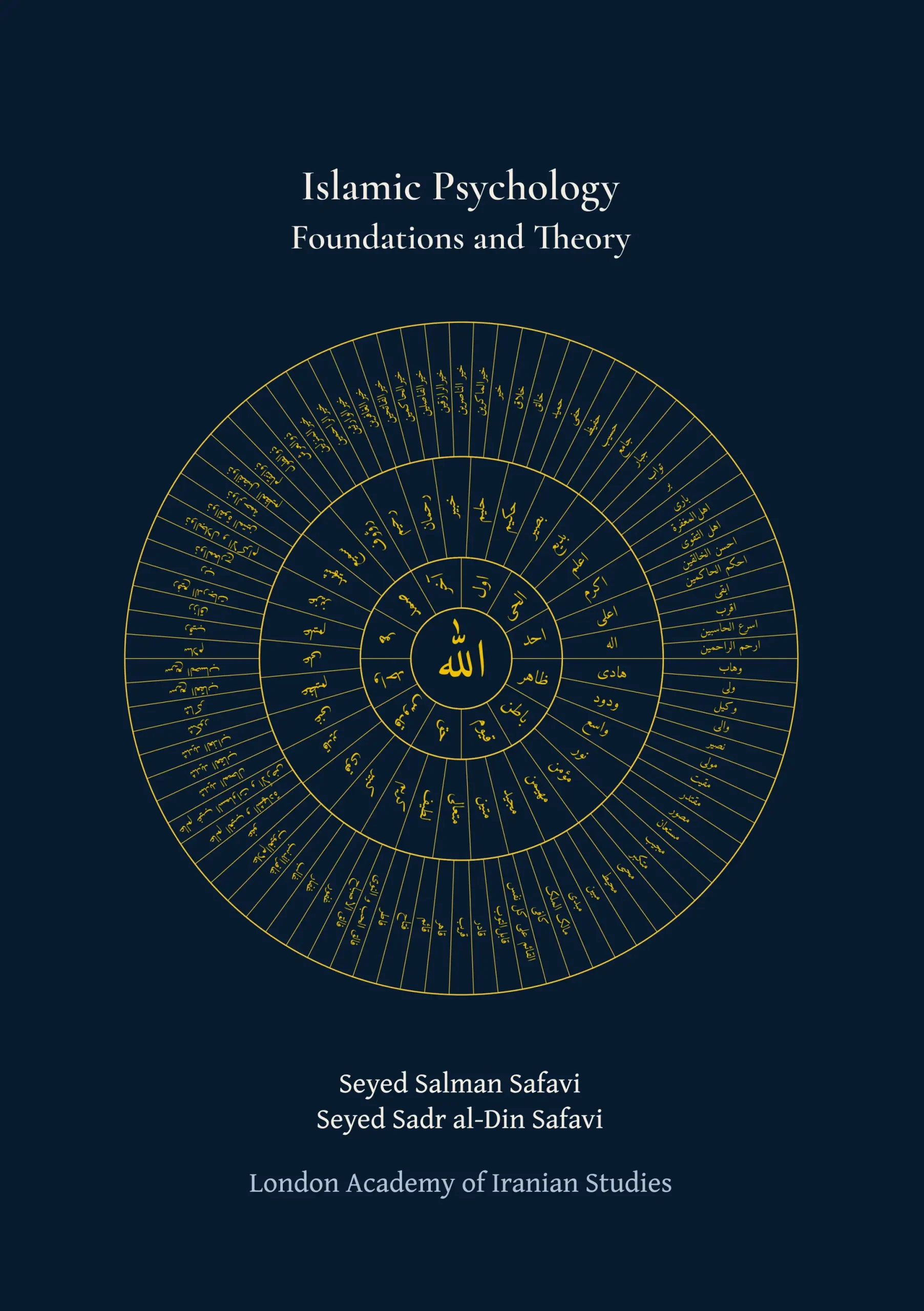
LAIS Press Announcement
About the Book
The London Academy of Iranian Studies Press is pleased to announce the publication of Islamic Psychology: Foundations and Theory, written by Dr Seyed Salman Safavi and Seyed Sadr al-Din Safavi.
The book presents Islamic psychology as a systematic science of the soul grounded in tawḥīd (Divine unity), revelation, reason and the Islamic intellectual tradition. Rather than adding Islamic concepts and practices to psychological models founded upon a different understanding of the human person, the authors construct Islamic psychology from within its own intellectual, metaphysical and spiritual worldview.
At its centre are Divine unity, the soul, primordial nature, love, perception, taqwā, dhikr (remembrance of God) and contemplation.
The human being is approached as an integrated and dynamic unity of body, nafs (soul/self), qalb (heart), rūḥ (spirit), ʿaql (intellect) and fiṭrah (primordial nature). Cognition, emotion, desire, moral struggle, character, suffering, healing and spiritual development are understood as interconnected dimensions of the soul’s formation and orientation.
The volume develops this account within the London School of Structural Islamic Psychology, pioneered by Dr Seyed Salman Safavi. Its principal methodology, Interpretive Semantic Structure, examines the ordered relationships among Qur’anic concepts to disclose a coherent psychology of the human being.
Within this framework, perception, belief, taqwā, love, dignity, moral agency and spiritual transformation are understood in relation to one another within an integrated psycho-spiritual system centred upon tawḥīd. Human flourishing is conceived not only in terms of adaptation, functionality or subjective wellbeing, but also in relation to truth, moral responsibility, rightly ordered love, spiritual refinement, Divine proximity and falāḥ (true flourishing and ultimate success).
Drawing upon the Qur’an, the authenticated Sunnah, ʿaql and the metaphysical, philosophical, ethical and spiritual sciences of Islam, the authors set out the ontological, epistemological and anthropological foundations of Islamic psychology, together with its conceptual vocabulary, intellectual genealogy and methodology.
The book also brings this framework into disciplined dialogue with contemporary psychology. It identifies where modern approaches may be engaged, extended, integrated or critically reconsidered in light of an Islamic understanding of the human person, the soul and human purpose.
Islamic Psychology: Foundations and Theory is the first volume of a planned three volume project. This opening volume establishes the theoretical and methodological foundations of the field. The second volume will develop its formative and psycho-spiritual practices, while the third will address specialised clinical application, empirical investigation and outcomes.
This sequence is designed to ensure that Islamic psychological practice and clinical care are developed from a coherent Islamic account of the soul, knowledge, disorder, healing and human purpose, grounded in the intellectual, metaphysical and spiritual worldview of Islam, rather than functioning as religious adaptations of psychological models based on different assumptions about the human person.
Written for psychologists, psychotherapists, counsellors, psychiatrists, chaplains, academics, researchers, students and readers of Islamic thought, Islamic Psychology: Foundations and Theory provides a substantive theoretical basis for the study, teaching, research and future development of Islamic psychology.
Now Available
Order Islamic Psychology: Foundations and Theory
Available formats: Paperback.